
"research findings"
3000 article(s) found

15% of consumers are affected by the environment and atmosphere-the number of cafes in China will increase in the past five years.
China has a tradition of tea culture, but compared with the prosperity of cafes, the development of Chinese teahouses is tepid, with an increase of 4 per cent from 48842 to 50984 between 2007 and 2012. MatthewCrabbe, director of Asia Pacific Research at Mintel, said that after the coffee chain entered China in the late 1990s, it expanded at a faster speed, but teahouses always struggled to find a way out and eventually consumed.

Biodiesel or coffee grounds
A new study by the Centre for Sustainable Chemical Technology at the University of Bath suggests that spent coffee grounds can be used to make biodiesel and have the potential to be a sustainable source of second-generation biofuels. The findings were published in the latest issue of ACS journal Energy and Fuels.

How many cups of coffee can I drink a day? Research points out that a large cup of Starbucks will meet the standard.
There are more and more coffee shops in Taiwan, which has become a small escape space in modern busy life. Many office workers drink more than one cup of coffee a day. Italians even drink coffee after meals, and even a cup of black soup before going to bed does not hinder sleep. However, in the end, how many cups of coffee can you drink a day? American studies have pointed out that a maximum of 400 milligrams a day is equivalent to an extra-large cup of coffee at Starbucks.

The harm of decaf: it is more likely to develop heart disease and is not suitable for patients with hyperlipidemia.
Professional coffee knowledge exchange more coffee bean information please follow the origin and development of decaf coffee in coffee workshop (Wechat official account cafe_style): why are all Swiss water treatment decaf coffee sold? Are you a coffee person? Doctors warn that drinking decaffeinated coffee will not make you healthier, but may increase the risk of heart disease; pregnant women drink

Coffee and prevention of radiation injury
Such as long-term computer users, home microwave ovens, televisions and so on. Especially for pregnant women, radiation has affected the health of the next generation. Reports in this area are not uncommon.
Scientists find that coffee protects against radiation
Indian scientists have found that coffee can protect laboratory mice from radiation. Scientists believe that drinking coffee is also suitable for human radiation protection. The researchers exposed the mice to caffeine and exposed them to 7.5 grams of radium (enough to kill mice). Twenty-five days later, they found that 70% of the mice who ate 80 mg of caffeine per kilogram of body weight were still healthy.
Study finds coffee causes faster hunger
This typical office breakfast seems to be nutritious and full of calories. But for some reason, this sumptuous breakfast did not last many people until noon.

Coffee common sense scientists find that coffee protects against radiation
Indian scientists have found that coffee can protect laboratory mice from radiation. Scientists believe that drinking coffee is also suitable for human radiation protection. The researchers exposed the mice to caffeine and exposed them to 7.5 grams of radium (enough to kill mice). Twenty-five days later, they found that 70% of the mice who ate 80 mg of caffeine per kilogram of body weight were still healthy.

Scientists find that coffee protects against radiation
Indian scientists have found that coffee can protect laboratory mice from radiation. Scientists believe that drinking coffee is also suitable for human radiation protection. The researchers exposed the mice to caffeine and exposed them to 7.5 grams of radium (enough to kill mice). Twenty-five days later, they found that 70% of the mice who ate 80 mg of caffeine per kilogram of body weight were still healthy.
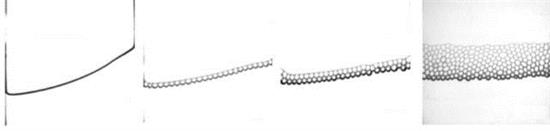
Black coffee with some foam coffee is not easy to spill.
It is not easy for bleary-eyed people to bring a full cup of coffee from the kitchen to the restaurant. With the pace of the person, the liquid surface of the coffee will shake constantly, and a little shaking will overflow from the mouth of the cup. However, the situation of lattes covered with foam is different. These foams not only provide creative space for thermal insulation and coffee flowers, but also have excellent shock absorption.

Endangered species! It won't be easy to buy Arabica coffee after a while.
Professional coffee knowledge exchange more coffee bean information Please note that the coffee workshop (Wechat official account cafe_style) is also a member of Arabica, why are some coffee beans so expensive? Arabica, the tree species of good coffee, is the story of a beautiful love encounter. Unfortunately, Arabica, the crystallization of beautiful love, is as weak and soft as Lin Daiyu.

When to drink black tea is better, it is good to drink tea at the right time! Drinking black tea at night affects sleep.
When it comes to losing weight, green tea is the best. Decades of research has shown that green tea extracts burn fat faster and help control weight. As expected, researchers began to take a closer look at other types of tea and their weight-loss effects. Black tea quickly became the focus of extensive research on how tea can accelerate weight loss. New findings show that black tea is also an effective weight loss helper

Coffee and tea are associated with reducing the risk of brain tumors
The findings, based on a study of 500000 people in Europe, provide evidence for a recent study in the United States that people who drink more coffee and tea have a lower risk of developing gliomas (gliomas). Glioma is the general term for many kinds of brain tumors, accounting for 80% of malignant brain tumors.

Caffeine reduces the risk of Alzheimer's disease
Research by Dr. David Bluem of the French Institute of Health and Medicine and Lille laboratory staff has shown that caffeine has a good effect on some brain diseases, especially Alzheimer's disease (commonly known as "Alzheimer's disease").
Can caffeine restore heart health?
Coffee seems to offer mysterious benefits of heart health, but doctors find it difficult to explain why.
Study finds that two cups of coffee a day reduces the risk of heart failure
A new US study published in the journal circulatory Heart failure finds that drinking two cups of coffee a day can help protect the heart and reduce the risk of heart failure (heart failure).

Smoking and drinking coffee help reduce the risk of Parkinson's disease
Researchers at Duke University Medical Center in the United States say people with Parkinson's disease drink less coffee and smoke less than other family members who are not sick, the Daily Health News reported. Their findings were published in April in the Archives of Neurology. Previous studies have shown that drinking coffee, smoking and taking non-steroidal anti-inflammatory drugs (NSAIDS) such as aspirin and cloth
Drinking the right amount of coffee in youth can reduce the risk of dementia and Alzheimer's disease in old age.
Researchers at Kuopio University in Finland and the Karolinska Association in Stockholm, Sweden, said in a recent press release that assuming high global coffee consumption, the results may have important implications for preventing or delaying the onset of dementia / Alzheimer's disease. The findings of this study need to be confirmed by other studies, but it turns on dietary intervention that may change dementia.

Is decaffeinated coffee coffee? The difference between decaf and regular coffee is caffeine?
For more information on coffee beans, please follow the origin and development of low-caffeine and low-caffeine coffee in coffee workshop (Wechat official account cafe_style): why are all Swiss water-treated decaf coffees sold? Night without stars is still night, but can coffee without caffeine count as coffee? As for zero-fat fresh milk, the import understands that it is not the same as fresh milk.
Three cups of coffee a day to help you prevent dementia
In a case-control study, researchers at the University of South Florida and the University of Miami found that people over the age of 65 with higher levels of caffeine in their blood were less likely to develop Alzheimer's disease within 2 to 4 years. Coffee appears to be the main source of caffeine in the blood of these subjects.